Showing posts with label Philippines Criminal. Show all posts

Monday, February 15, 2021

The challenge of complex IP disputes in the criminal system in the Philippines

A Manila Prosecutor has thrown out a utility-model infringement and unfair competition complaint. A criminal case was filed by TouchPay payment system owner Manila Express Payment Systems Inc against the officers of BTI Payments Philippines and Electronic Transfer Advance Processing Inc. (eTAP). Both are also online payment and processing companies.

The case began with a raid by the National Bureau of Investigation (NBI) after a court granted search warrants against the two defendants in July 2020 on the basis of confusing similarity in the appearance of the automated payment machines.

The case passed to the Department of Justice but the Prosecutor rejected the complaint as prematurely filed. Criminal actions for utility model infringement may only be filed for repeated breaches of Section 76 (which covers Civil Infringement) of the IP Code (Republic Act 8293), after a civil judgment. 

Under the unfair competition charges the defendants were accused of misrepresenting the IP owner’s goods or services as their own. More specifically passing off eTAP’s Pay&Go automated payment terminal as the IP owner’s TouchPay machine. But the prosecutor decided there was not sufficient evidence as the physical appearance of eTAP’s Pay&Go machine looks different so no end consumers were misled. 

Utility model and unfair competition cases are extremely hard cases to press through any criminal system. A number of SE Asian countries allow criminal remedies in such cases, but in most developed countries a case like this would be filed through civil courts for an injunction and damages. Technicalities need a more detailed examination that prosecutors and criminal courts should be expected to spend time on. 

Thursday, March 12, 2020

The Philippines mayor and the counterfeit sneakers


Image result for quezon city philippines logo


Mayor Joy Belmonte of Quezon City a region of Metro Manila has had to issue a formal warning to her department. It appears that the Quezon City government accidentally ordered 1100 pairs of counterfeit sneakers, for use by local athletes representing Quezon City in various national sports events.

The City's Procurement Department's Bids and Awards Committee has a Technical Working Group which apparently selected the supplier of the sports shoes. They will now need to investigate what happened. Mayor Belmonte ordered the City Legal Office to initiate legal action against anyone who was involved or conspired to commit any offenses. apart from the IP laws, the Consumer Protection Act and the Procurement Act may have been breached. The mayor has ordered the recall and replacement of the counterfeit shoes.

Sunday, February 2, 2020

EU IP report downgrades Philippines despite uncertainty over enforcement

Image result for eu philippines
The EU has dropped the Philippines from its list of countries involved in trade of counterfeit goods. The European Commission (EC) report showed that the country was removed from the Priority 3 list. The EC reports fewer IP complaints from stakeholders and the relatively higher importance of other countries for EU IP owners. So on the one hand this is good for the Philippines, but on the other it reflects that IP reports, like trade, can sometimes be a zero sum game; that is if others are attracting more IP interest, it counts as a loss. So this does not necessarily mean an improvement, more that EU trade with Philippines isn’t strong. Negotiations for an EU-Philippines trade and investment agreement were launched on 22 December 2015 and have continued off and on since then. 

In recent years the Philippines has improved its enforcement systems, with the NCIPR usually cited as a key breakthrough - see here. However the country still has problems with counterfeit and pirated products. Customs ineffectiveness is an oft cited problem, with the Customs IP recordal system largely ineffective at leading to seizures. 

A key new issue for SE Asian countries is Trump’s trade deal with China, since it has a focus on preventing counterfeiting goods leaving China, as exports. Around 75% of fakes in SE Asia come from China (UK government data).  The EU reported that the Philippines continues to have a healthy trade in fake goods in a number of areas including leather articles, handbags, pharmaceuticals, footwear, games, toys, sports equipment and fake jewelry. However this data is now believed to be very old. 

Meanwhile on the positive side Philippines is one of the leads on enforcement under the 2016-2025 ASEAN IP Action Plan so its IPO continues to be at the forefront of activity in the region.  

Thursday, July 11, 2019

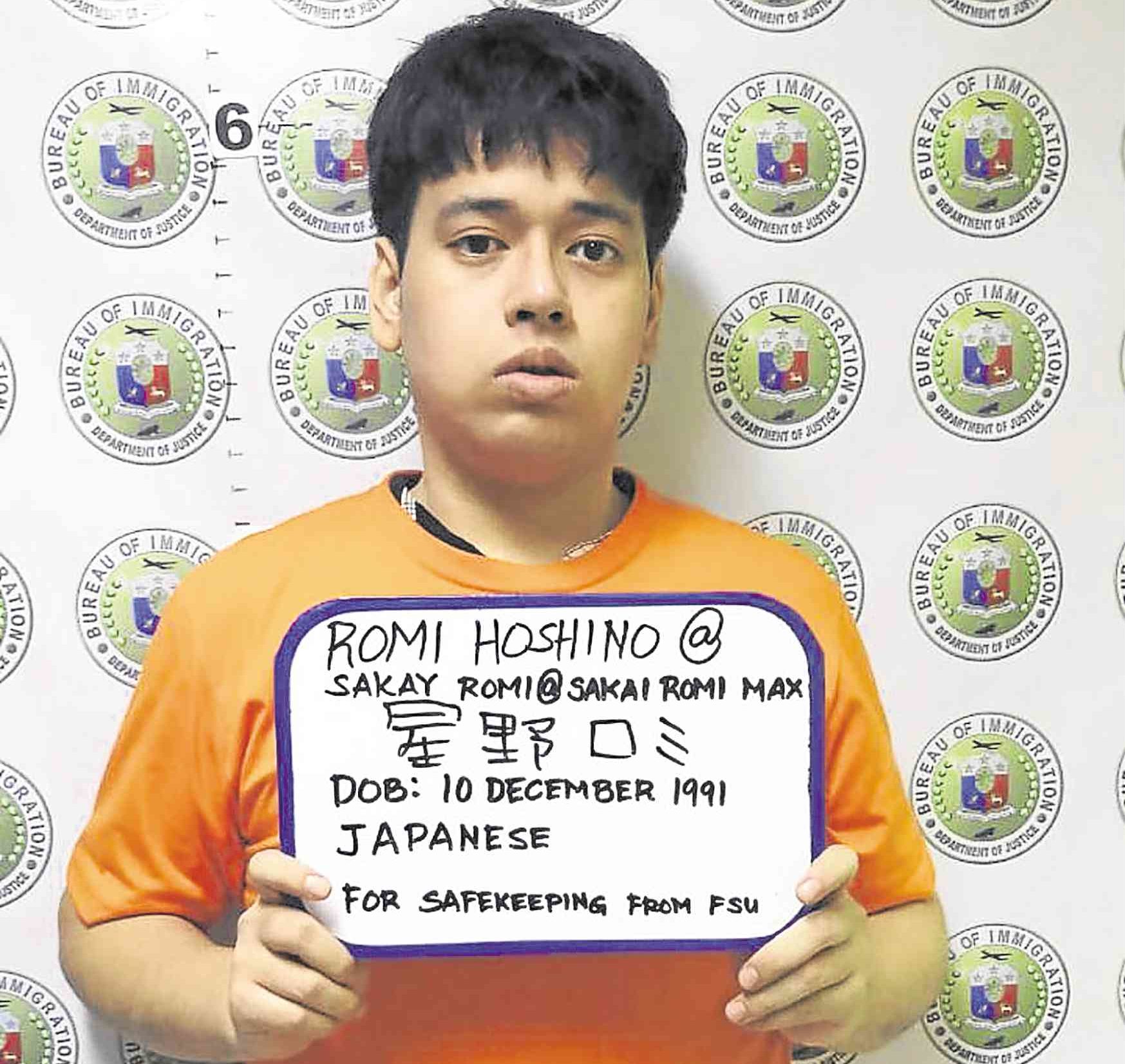
Japan’s Manga manhunt ends in Manila

Image result for manga mura
A Japanese man Romi Hoshino set up a website Manga Mura or Manga village, which was an online comic and novels library. However most of tens of thousands of Manga titles available for its  year or so of operation, were pirated copies. Nevertheless millions read them. Japanese Manga publishers complained and a task force in Japan set out taking action. The site was blocked in April 2018, but Hoshimo fled. 

Japan's Content Overseas Distribution Association has said that Manga rights owners have lost billions revenues due to the site’s alleged hundreds of millions of visits. Hoshimo was accused of massive scale copyright theft, and became the subject of an Interpol alert.

The tracing of Hoshimo led to the Philippines, the Japanese embassy sought local assistance and he was arrested last week in Manila airport. Under local law he is deemed a risk to public safety and security, and so will likely be deported to Japan where he will probably face a criminal trial. 

Monday, June 17, 2019

Online ecom platform medicine sales halted in Philippines


Image result for online pharmacy

The Philippines' Food and Drug Administration (FDA) has prohibited two major online ecommerce shopping platforms Shopee Philippines and Lazada Philippines to cease sales of medicines. The platforms do not have licenses to sell pharmaceutical products. The FDA is part of the Department of Health, and acted to stop the placing of "the lives of the general public in danger...".

The FDA served each of the two companies with a "summons with preventive measure order" directing each one "under pain of direct or indirect contempt and/or other administrative sanctions" to stop selling and offering pharmaceutical products on their online platforms. 

If is possible for pharma products to be bought online provided that the seller has an FDA-licensed pharmacy with a physical address, with the online ordering services as an additional activity of the licensed pharmacy.  An example is Watsons, through its online store: https://www.watsons.com.ph/health-&-rx/lc/060000 

Online marketplaces will not qualify as they are not licensed pharmacies. however sales of medicines through platforms has been growing in recent years. The risk of fakes being sold online was therefore significant.

Monday, June 10, 2019

IPOPHL proposes enforcement amendments to the IP Code of Philippines


The Intellectual Property Office of the Philippines (IPOPHL) has submitted a bill to Congress proposing amendments to the Intellectual Property Code of the Philippines. These are aimed to support IP enforcement in general and more especially in the digital environment.
The digital enforcement amendments grant IPOPHL the authority to take down online sites that infringe the rights of the IP owners. IPOPHL will have the power to issue notice and takedown requests against online piracy and counterfeiting.
Further, landlord liability, which applies only to copyright infringement under the IP Code will be applicable to trademark infringement as well. Lastly the proposed bill makes the NCIPR, the government’s anti-piracy task force, a permanent unit with a permanent IP representative in each of the agencies.
Another recommendation by IPOPHL in case of copyright infringement is for the copyright owners to have ownership of the domain name of the violating website transferred in addition to entitlement to damages from the advertising revenues earned by the infringing site. This, however, will be proposed in another amendatory bill in the next Congress.

Wednesday, June 20, 2018

A new approach to replacing fakes in the Philippines


Image result for greenhills manila
An innovative plan to replace counterfeit goods with local Filipino crafts has been proposed by the Intellectual Property Office of the Philippines (IPOPHL). The drive for this is the increased enforcement leading to a reduction in sales of fake goods by traders in the notorious  Greenhill shopping centre. Greenhills is undergoing upgrade renovations.

The IPO sees a different benefit namely to insert IP into locally-made products.  They hope that  a newly opened Greenhills can become a premier showcase for high quality and inventive Filipino products created by Filipino inventors, entrepreneurs and designers. The IPOPHL Director offered its network of Innovation and Technology Support Offices that support local R&D, to help. They identified locally designed jewelry is one opportunity along with specialized crafts like doll-making both of which are threatened by overseas imports.

Sunday, October 8, 2017

Fake cops in Manila

Image result for philippine national police

The Philippines National Police are facing a problem of fake uniforms. Criminal have apparently been passing themselves off as police, especially by using fake badges and insignia. 
 
Now the PNP chief has issued a circular directing their units to take more care and control the circulation of uniforms, badges and the like. There is already an executive order from 2000 prohibiting the manufacture sale and distribution of fake police uniforms and badges. The military have also joined the debate issuing a statement last week too. Republic Act 493 prohibits civilians from wearing, using, manufacturing, and selling military uniforms, insignia, medals, and badges prescribed only for soldiers and policemen.  They also pointed out that the IP Code allows them to take action. 
 
At least they realise they can use the trademark and unfair competition laws to stop this (regardless of special regulations, circulars etc). After all they enforce the criminal aspects of these IP laws. Or maybe they are not confident in their own enforcement of the IP laws to protect their own IP!  


Wednesday, November 4, 2015

Philippines criminal copyright case finally decided - and the case is thrown out!

Image result for abs-cbnA Supreme Court (SC) decision has issued concerning ABS-CBN news footage covering the homecoming on 22 July 2004 of Angelo delay Cruz, an expatriate worker kidnapped by Iraqi militants. ABS-CBN allowed Reuters to air the news footage for international subscribers only. GMA, a Reuters subscriber, received the live video feed from Reuters and broadcasted the footage for about 5 seconds. ABS-CBN took action GMA for criminal copyright infringement.

The public prosecutor found probable cause to indict GMA’s Program Manager and Head of News Operations. GMA appealed to the DOJ which ruled in its favor of GMA holding that good faith may be raised as a defense. The Prosecutor and ABS/CBN sought reconsideration of the ruling (anyone can seek reconsideration of most Philippines decisions without any penalty - a longstanding problem with the legal system). Subsequently the DOJ reversed its earlier ruling, found probable cause to charge the two people and indicted them. GMA appealed that ruling to the CA, which ruled in favor of GMA and declared that since GMA only aired 5 seconds of the footage and had no notice of the “No Access Philippines” restriction, there could be no criminal liability as it wasn’t intentionally committed. So ABS-CBN filed the appeal before SC.

The SC ruled news footage is copyrightable. GMA argued 5-seconds may be considered fair use. This is a matter of a defense which should be evaluated at the trial but the SC took note of the high value of broadcasts and the limited time periods seen in other media such as Instagram, Vine and 1 Second Everyday.  But the SC ruled that although “any person” may be guilty of infringement criminal liability of a corporation’s officers or employee’s stems from their active participation in infringement. GMA’s officers were thus not liable for infringement as they had no knowledge so could not be personally liable.

The case illustrates 2 problems. One is the length of time the Philippines criminal system takes - 10 years here to throw the case out. The primary reason is the huge number of appeal levels and lack of penalty for getting it wrong (i.e. costs, bad reputation for prosecutors who make mistakes). Secondly this was really a civil case over a royalty fee for use of footage. It was waste of time and public money.  The damage to society was so limited that the prosecutors and DoJ should have refused the cases as having no wide effect on society, so referred them to civil action. Then they could focus on 'real' criminal IP cases.  

Sunday, July 26, 2015

How to measure the volume of raids and seizures - Indonesia, Philippines and Thailand comparative data

Indonesia's IPO investigation team has published its latest figures about enforcement raids. It still makes disappointing reading that only 9 raids have taken place in 2015 so far. The police probably handle a few more, but they do not publish and due to their reputation for demanding operational costs for economic crimes, few IP holders can use them.

Statistics / data 2011-2015
No
Intellectual Property Cases
Year
2011
2012
2013
2014
2015
1
Copyright
2
4
3
5
1
2
Patent
0
2
0
1
0
3
Trademark
26
25
14
10
6
4
Industrial Design
6
3
0
1
2
Total
34
34
17
17
9

Comparative data from elsewhere isn't always ways to find. So how do we measure Indonesia's 17-34 raids per year - lets say 50 if we include police raids.  
 
In the Philippines they measure the number of products seized. This always sounds better because they can talk of millions of dollars, but basing fake values on real values isn't entirely accurate. That said the Philippines enforcement bodies say they will seize over P13 billion ($287.57 million) worth of fakes in 2015. On July 7 Intellectual Property Office of the Philippines (IPOPHL) announced this target. In the first 6 months of 2015, Philippines authorities have seized some P775 million ($17.15 million) worth of counterfeit and pirated CDs, DVDs, books, medicine, designer bags, shoes, and other items. This does not exclude FDA (Food and Drugs Administration) and Bureau of Customs data which was not yet included.  Whilst they don't say how many raids this took, the expectation is that it would have been thousands of cases, because Thai data does break both out.
 
Thailand's police publish statistics on all raids by all departments.  In 2014 the data shows:
 
Trademarks  - 5,974 cases - 817,792 items seized
Copyrights  -  3,592 cases  - 308,235 items seized


It is hard to know what calculation would be needed to value the goods, but assuming say 25 USD a product that would take the value to USD28 million. The Thai data doesn't include Customs, but they seized hundreds of thousands of products in 2014 too.

What this analysis shows is that Thailand and Philippines are operating enforcement systems that seize4 large quantities f products through thousands of raids each year. Indonesia's enforcement therefore in comparison is almost non existent.